
Snow Melts
Mar 17, 2026 | By Joseph Yu BF ‘28
My apologies in advance to our Texan readers—if you’ve never seen snow before, you’ll have to use the imagination God has given you for the next few paragraphs.
I’m back home for break in Central Massachusetts and the weather has been hovering around 50 Fahrenheit for the past week, not even dipping below freezing on certain days. By New England standards, spring is here, and Punxsutawney Phil’s clock is expiring. It feels as if the moment it shoots above 60 degrees again, green buds and shoots will burst forth and transform the barren forests into a shimmering, viridescent display.
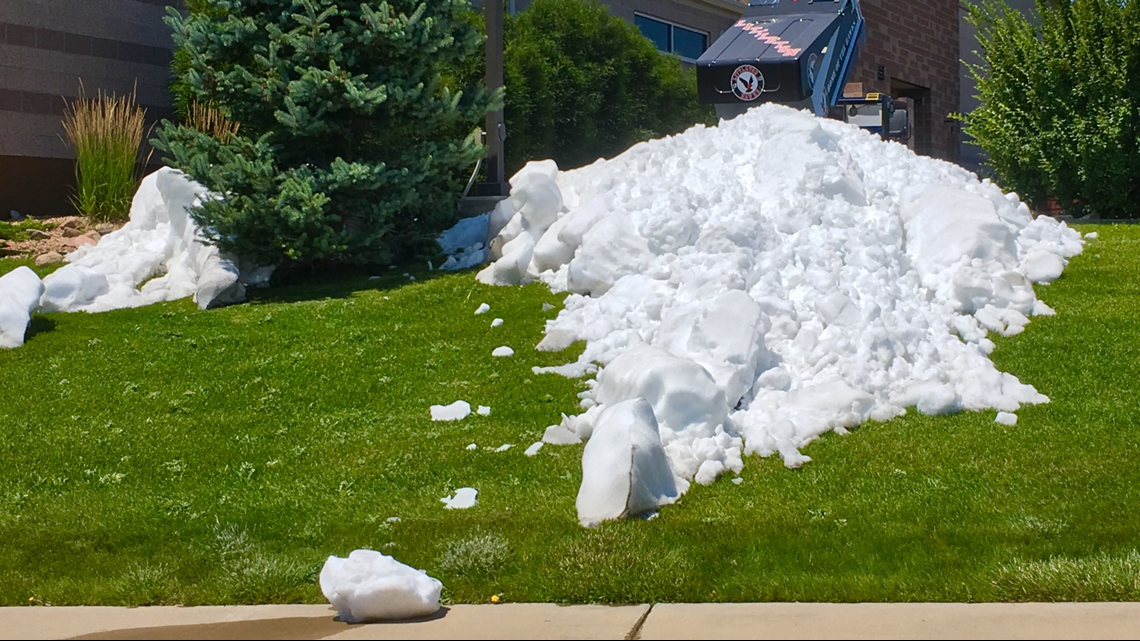
Yet something remains on the ground. White water, in frozen fractals all around [1]. Despite how the sun beats down on these piles all day long, the snow remains. The piles get smaller as streams of runoff might flow down sidewalks, but still, the snow remains.
I know we often like to focus on the greenery of nature, symbolizing life at its fullest. Easter, which lies at the conclusion of our Lent series, often coincides with the pinnacle of spring. We associate lushness with goodness, but consider for a second the stubbornness of snow. How it remains in an environment where it shouldn’t. An environment that, if it had feelings, hates snow and does everything in its power to eviscerate it.
Sound like anything familiar? As Jesus tells his disciples, “You do not belong to the world… That is why the world hates you” [2]. Or perhaps the Parable of the Sower, which reads:
Then he told them many things in parables, saying: “A farmer went out to sow his seed. As he was scattering the seed, some fell along the path, and the birds came and ate it up. Some fell on rocky places, where it did not have much soil. It sprang up quickly, because the soil was shallow. But when the sun came up, the plants were scorched, and they withered because they had no root. Other seed fell among thorns, which grew up and choked the plants. Still other seed fell on good soil, where it produced a crop—a hundred, sixty or thirty times what was sown. Whoever has ears, let them hear” [3].
Some snow melts on impact without even the chance to accumulate. Other snowflakes might fall on rocky places—that is, rock salt, and adhere to the boot of a Yalie before ruining their suite flooring. Still other snow accumulates, but as soon as the sun comes up, it melts away.
Then there’s the snow that falls on “good soil,” defiant of hostile conditions. The snow that remains even as the sun nourishes the hungry chlorophyll of grass blades jutting up right through it. Yet, as Scripture remarks about that which is green, “The grass withers and the flowers fall, but the word of our God endures forever” [4]. It is not my intention, however, to equate God’s word to snow and suggest that we start searching for hidden messages in its fractaled composition. All snow will melt, because we live in a mortal world where nothing remains forever. But consider if we ever treat a half-melted pile of snow, filthy and neglected, like how we might treat God’s word.
Resilient snow (with a bit of stacking help) can remain through to mid-July [5], if not year-round on mountaintops. I keep talking about how the snow “remains.” It sounds rather static. But in John 15 as Jesus describes himself as a vine, the phrase “remain in me” is also translated as “abide in me.” Abiding is dynamic, as Jesus also says he will abide in us.
It might be difficult for inanimate snow piles to abide, evangelize, and bear fruit, but that’s why God sent us humans into the world with agency. We are not like snow piles on an inevitable march towards their demise, but are renewed daily by the Holy Spirit to perform his kingdom’s work. The journey is not easy, by any means. But consider if God can provide for the lilies of the field [6] and even piles of snow, he is more than able to sustain us too.
The next time you come across that quotidian nuisance, such as the snowbank that blocks you from jaywalking to class, focus on its incredible obstinacy. Just what lengths it must cross to annoy you every day. You might find it’s not really an annoyance after all, but an incredible display of persistence that God calls you to all the more.
If only Judea were a tundra, we might instead have had the Parable of the Snower.
[1] https://www.youtube.com/watch?v=moSFlvxnbgk
[2] John 15:19
[3] Matthew 13:3-9
[4] Isaiah 40:8
[5] https://www.wbur.org/news/2015/07/14/boston-giant-snow-pile-gone
[6] Matthew 6:28