
An Eyeless Animal
Mar 18, 2026 | By Mollie Walters UT Austin ‘27
In 2011, Texas experienced the worst 1-year drought on record. From one winter to the next, average precipitation was 11.27 inches [1]. Statewide water reservoirs dropped to 58%. Plants dried out. Wildfires sparked and destroyed over 1,600 homes [2]. In the end, total crop and livestock losses summed to approximately 7.62 billion dollars [3].
Why did this drought happen?
My research identified two causes. The first was the warming and cooling patterns of the Pacific Ocean’s temperature, called El Niño and La Niña, respectively [4]. Climatologists can forecast El Niño and La Niña, enabling governmental authorities and citizens to prepare. My dad, who works for the Texas National Guard, often employs a popular military adage, saying, “Proper prior planning prevents pitifully poor performance.”
In 1647, Spanish priest and political writer Baltasar Gracián wrote, “In Prosperity prepare for Adversity. It is both wiser and easier to collect winter stores in summer.” Gracián knew winter was coming. One year later, in 1648, the Spanish Empire signed a series of treaties called the Peace of Westphalia, a critical hit to Spanish power.
Both sayings are true. In most cases, preparing for something ensures success. Or, at least, a calmer temperament when it comes. But what if disaster is unexpected? I’d argue the 2011 Texas drought was largely unexpected because El Niño and La Niña didn’t act alone. The second cause of the drought was atmospheric variability. Variability is inherently unpredictable [5].
How do you prepare for the unknown? One approach is overpreparation. Pack your first aid kit and scuba gear for a chat with a friend at a coffee shop. Nothing will faze you. Another approach is no preparation, as you assume everything is unknown. I won’t bring money for coffee; who knows, maybe they’ve already run out. These examples are exaggerated, of course, but common are the underlying statuses: anxiety and self-doubt.
As you might’ve guessed, the median between the extreme kinds of preparation is best. And faith. Faith that you’re somehow ready for today, tomorrow, or the next season, even if you haven’t yet realized how.
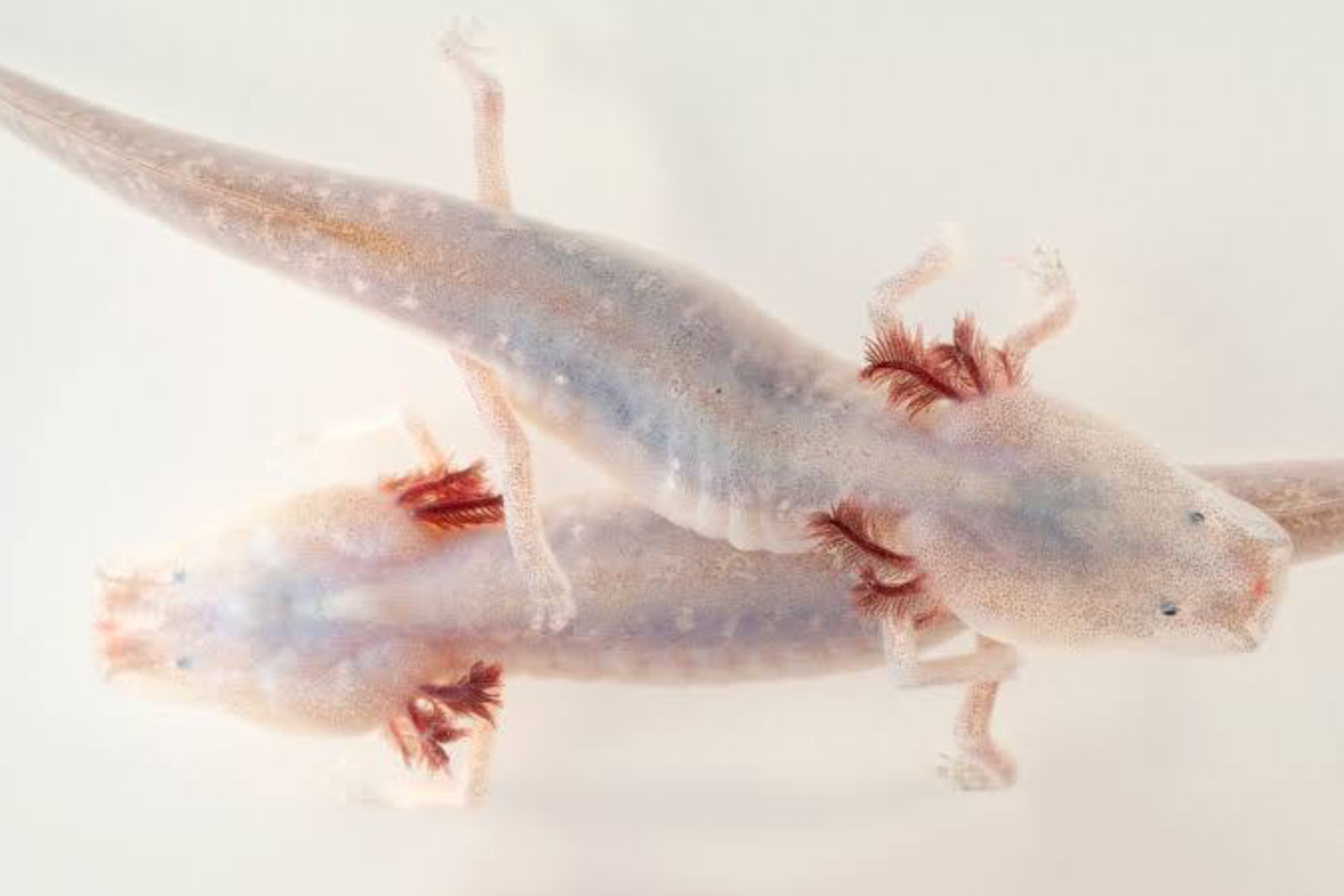
An unassuming actor allowed San Antonio, a densely populated city in Texas, to have water during the 2011 Texas drought. It was an eyeless animal.
Back in the mid-1990s, environmental advocacy groups sued San Antonio because the city’s unregulated sapping of the Edwards Aquifer, a limestone-based groundwater system, threatened Texas blind salamanders. The Texas blind salamander is 5 inches long with floppy, pinkish gills and no eyes. The United States listed them as endangered in 1967. A federal judge ruled to limit how much water San Antonio could take from the aquifer.
At first, local leaders opposed restrictions on the Edward Aquifer. But when the 2011 drought came, they knew the saved water was a godsend. Without the salamanders and their advocates, that water might’ve been spent.
Perhaps retrospect, not intention, defines preparation. Most San Antonians saw the salamanders as useless until the time was right.
Coda
I’d guess everyone has their El Niño and La Niña: patterns that bring expected challenges. For students, that pattern is semesterly final exams. For widows and widowers, the pattern is a wedding anniversary. For Christians, that pattern is Lent.
Continual fasting and prayer can be challenging. So you might’ve prepared to fast from social media by ordering 10 books on Amazon or to fast from sugar by removing the cookies in your pantry. Preparation makes commitment easier. The knowledge that Lent ends with Easter evokes resilience.
Though Lent itself is an expected pattern, I’d argue that Lent is meant for the unexpected. The diagnosis. The job loss. The death in the family. The trials without an end in sight. Lent allows us to fill our aquifers with holy water for droughts yet known.
Still, preparation isn’t only in our hands, but in God’s, too. Out of all the verses I read, the hymns I sing, and the relationships I deepen during Lent, I wonder: what might be my Texas blind salamander? By that, I mean what is something that’s unassuming now that will become a godsend later?
[1] Winters, K. E., Geological Survey, issuing body, & Texas Water Development Board, issuing body. (2013). A historical perspective on precipitation, drought severity, and streamflow in Texas during 1951-56 and 2011 / by Karl E. Winters ; prepared in cooperation with the Texas Water Development Board. U.S. Department of the Interior, U.S. Geological Survey.
[2] Nielsen-Gammon, J. W. (2012). The 2011 Texas Drought. Texas Water Journal, 3(1), 59–95. https://doi.org/10.21423/twj.v3i1.6463
[3] Fernando, D. N., Mo, K. C., Fu, R., Pu, B., Bowerman, A., Scanlon, B. R., Solis, R. S., Yin, L., Mace, R. E., Mioduszewski, J. R., Ren, T., & Zhang, K. (2016). What caused the spring intensification and winter demise of the 2011 drought over Texas? Climate Dynamics, 47(9–10), 3077–3090. https://doi.org/10.1007/s00382-016-3014-x
[4] Winters, K. E., Geological Survey, issuing body, & Texas Water Development Board, issuing body. (2013). A historical perspective on precipitation, drought severity, and streamflow in Texas during 1951-56 and 2011 / by Karl E. Winters ; prepared in cooperation with the Texas Water Development Board. U.S. Department of the Interior, U.S. Geological Survey.
[5] Fernando, D. N., Mo, K. C., Fu, R., Pu, B., Bowerman, A., Scanlon, B. R., Solis, R. S., Yin, L., Mace, R. E., Mioduszewski, J. R., Ren, T., & Zhang, K. (2016). What caused the spring intensification and winter demise of the 2011 drought over Texas? Climate Dynamics, 47(9–10), 3077–3090. https://doi.org/10.1007/s00382-016-3014-x