
Summa Thomas Chalmers: On Inspiration
Mar 16, 2026 | By Joelle Chong
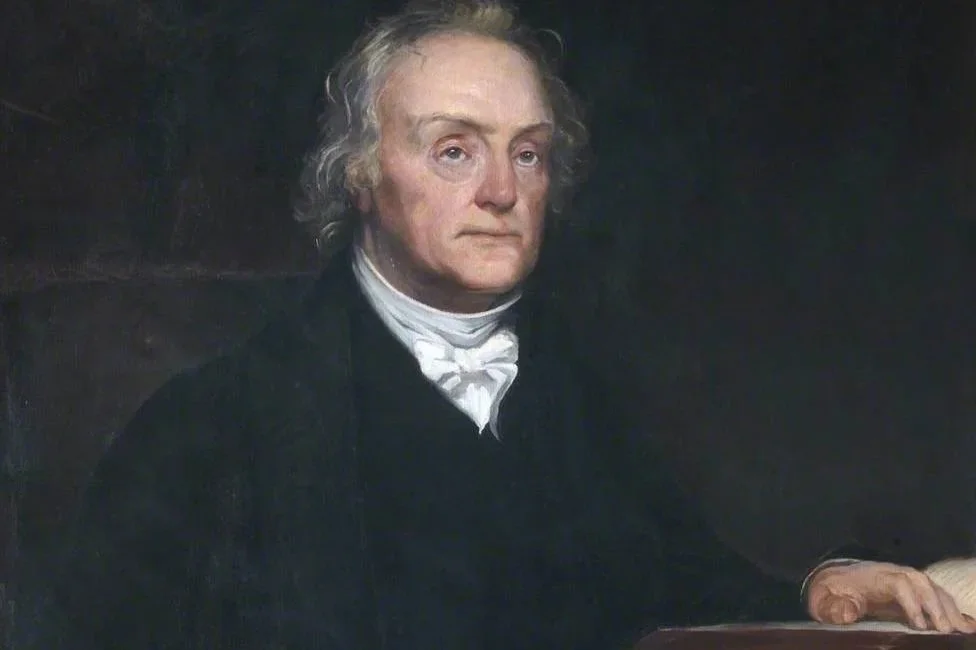
Modern conversations about the Bible have seen a recurrent trend: individuals will study the Bible and subsequently choose to soften or re-interpret aspects of the scripture. Some believe that many sections of the Bible represent the thought of their respective eras. Many others believe that if the Bible were written today, it would convey an entirely new message. The underlying idea behind both of these beliefs is that divine truth is historically bound and, therefore, that elements of the Bible can be reduced or eliminated without diminishing the totality of the message contained in scripture. The implications of accepting the idea that divine truth is temporally bound are monumental. If one accepts that only some of the scripture is inspired by God, then the authority of scripture becomes conditional upon interpretation, and all claims made in scripture become subject to selective interpretation. However, if the entirety of scripture is considered to be wholly and infallibly inspired by God, then the scripture must be interpreted cohesively as a single, unitary revelation rather than as a series of discrete, culturally limited revelations.
Thomas Chalmers’ essay on Inspiration presents this very problem by arguing for the Bible’s complete divine inspiration. Chalmers illustrates that the authority of Scripture cannot be due to a merely human process of writing imperfectly guided by God. Rather, the authority of Scripture is due to God’s direct and complete intervention into the process of writing the Scripture. Chalmers shows that God communicates His truth to humans through human writers so precisely and perfectly that every single word of Scripture is written under God’s direct guidance. The presence of God is evident not only in the overall message of Scripture but also in the very details of how it was expressed [1]. Chalmers believes that if the totalinspiration of Scripture is diminished as a doctrine, then the authority of Scripture is also diminished.
Thomas Chalmers is a prominent theologian who has expressed opposition to the idea of the Bible being partially inspired, and his views on Biblical Authority are frequently cited when discussing the concept of the Bible’s full inspiration. In his essay titled “On Inspiration,” Chalmers posits that it is through scribes that the Lord imparts His truth to humanity. Chalmers states that the Lord imparts His truth to humanity through the scribes’ writings. Chalmers stated that his writing will be important to both the skeptical and the faithful, asserting that the entire authority of the Bible comes from God and that God directs every aspect of the Bible’s creation. Chalmers also asserts that the authority of the Bible rests on its complete divine inspiration; the Lord is present in every word and in every aspect of the creative process [1].
Proponents of partial or mitigated inspiration believe that the Bible’s inspiration is incomplete. This perspective divides revelation into three stages: the initial Revelation from the mind of God, its reception by prophets and apostles, and its inscripturation [2]. Even if the initial revelation is considered perfect, they believe a discontinuity may have occurred between receiving the revelation and writing it, which may have interrupted the process of transmitting Revelation. Advocates of this view are concerned that human involvement may compromise the Bible’s divine quality. Even though the process of transmitting revelation comes close to achieving divine perfection, it is perceived as potentially flawed because of human involvement [1].
Proponents advance that instead of a perfect transmission of the message, it was left to human means. Essentially, God was understood to be less directly present. They believe thathuman frailties tainted the process of transmitting Revelation, and that the authors marred its brilliance through their human error [1].
Chalmers argues that if you accept only parts of scripture as true, it will destroy the entire concept of the Bible’s total validity. Chalmers asserts that there are two ways to establish the authority of the scriptures: either one accepts that the scriptures were written through a completely divine-inspired process, or one believes that the scriptures were written in part through a flawed human process.
According to Chalmers, the process of divine inspiration occurs in heaven and is then conveyed directly to the apostles by God. The author encourages both those who doubt and those who believe to consider how divine truths are communicated to us through human authors [1].
Even though his opponents believe that God did not guide the Bible to the end, Chalmers claims it is strange that God started the process of transmitting Revelation but refused to see it through. Consider: Why would God go to significant lengths for the first part, but then decide not to do the same for the second part? He supports this argument with 2 Timothy 3:16-17: “All Scripture is God-breathed and is useful for teaching, rebuking, correcting and training in righteousness, so that the servant of God may be thoroughly equipped for every good work." The phrase “God-breathed” signals that the Bible’s words originated from God himself, and not merely from the human psyche. For Chalmers, this divine origin ensures its inherent truthfulness and flawlessness. The text states that the God-breathed Scripture is sufficient to make a person of God “thoroughly equipped for every good work.” This can be taken to mean that no additional human or extra-biblical revelation is necessary. Scripture, by virtue of its divine source, isperfectly adequate to meet all spiritual needs [4]. Chalmers sees the completion of the Bible’s writing, guided by divine inspiration, as a perfect, finished work: work that requires no further human addition or thought.
The theory of partial inspiration is unacceptable to Chalmers, a man who believes that God, in His divine nature, would always complete what He began. He sees such a view as inconsistent with God’s nature: a God who initiates revelation yet abandons it before completion would contradict notions of divine perfection and faithfulness [4].
While Chalmers also believes it is impossible for humans to understand the nature of inspiration, he feels there is no adequate theory as we have them now. Since Chalmers believes divine truth requires perfect inspiration, any perceived “human” influence would not detract from the illumination of humanity provided in the Bible, but rather, Chalmers believes God has caused the text to be perfectly inspired so that all humanity can be guided and saved. Chalmers details that inspiration surpasses human understanding and that divine truth requires perfect inspiration. He argues that the Bible’s purpose is to illuminate, and therefore, it cannot be diminished by human involvement. God ensured its perfection, taking human limitations into account, to guide the world. God’s involvement in the production of Scripture was direct and active, shaping every word and piece. This view supports the notion that full divine participation was necessary, resulting in a text free from doctrinal and expressive flaws or contradictions [3].
For Chalmers, the central issue is whether the Bible authentically conveys the mind of God. He observes: The important question is not the process, but the qualities of the resultingwork. The focus should be on the substance and expression of Scripture as a comprehensive guide to faith. Individuals do not merely think as inspired. They speak in ways that reveal the influence of the Holy Spirit. According to Chalmers, the perfection of Scripture surpasses the explanatory ways of any human theory [1].
This view of inspiration provides an insight into how the authors were inspired and influenced by the Holy Spirit; the close guidance of the Holy Spirit makes the writers perfect instruments through which God can express Himself in Revelation and alleviate some of the concern for possible errors made by humans in the writing process [1].
For Chalmers, it is the Christian’s responsibility to rise and protect the integrity and inspiration of the Bible, just as the Lord is a pillar of fire that led Israel from the wilderness into the promised land. Zechariah 2:5, the Lord states, “and I myself will be a wall of fire around it, and I will be its glory within.” In the same way, believers are encouraged to consider the scriptures flawless and the ultimate truth. When man places limits on its authority, the entire foundation begins to crumble. It is the infringement of limits that destroys everything. Chalmers marshals Psalm 11:3 to reiterate his point, asking: “If the foundations are destroyed, what can the righteous do?”
The Holy Spirit enables the believer to protect and support the authority of scripture [1].. Believers have a duty not only to affirm the authority of the scriptures as inspired by God, but also to defend them and teach others that they are the authoritative guide for faith and living. Since the scriptures are written with divine inspiration, they contain both divine authority and human integrity—God worked through the human authors without reducing them to their humanity and historical significance.
Therefore, the believer will be able to read the bible with confidence, humility, and accountability. The believer will be able to apply the bible faithfully and obey its teachings. Therefore, believers will be able to read it carefully, teach it faithfully, and apply it obediently. In addition, because the scriptures were written through humans, the believer will be able to recognize the historical and literary forms in which God has chosen to communicate his word.
Finally, Chalmers’ teaching encourages believers to believe the scriptures completely, to defend them graciously, and to apply them to both their private and public lives.
[1] Chalmers, Thomas. On the Inspiration of the Old and New Testaments. Andrew Elliot, 1879.
2. Challies, Tim. “Revelation, Inspiration, Illumination.” Tim Challies, 5 Dec. 2006, www.challies.com/articles/revelation-inspiration-illumination/.
3. Elliot, Mark, and David Fergusson. “Welcome to Zscaler Directory Authentication.” Oup.com, 2026,
academic.oup.com/book/35069/chapter-abstract/299039120?redirectedFrom=fulltext. Accessed 1 Feb. 2026.
4. “The Inspiration of the Scriptures.” The Free Church of Scotland (Continuing), https://www.westminsterconfession.org/resources/the-doctrines-of-grace/the-inspiration-of-the-scriptures/. Accessed 14 Jan. 2026.