
The Art of Presence Without Presence
Jan 14, 2026 | By Raleigh Adams YDS ‘26
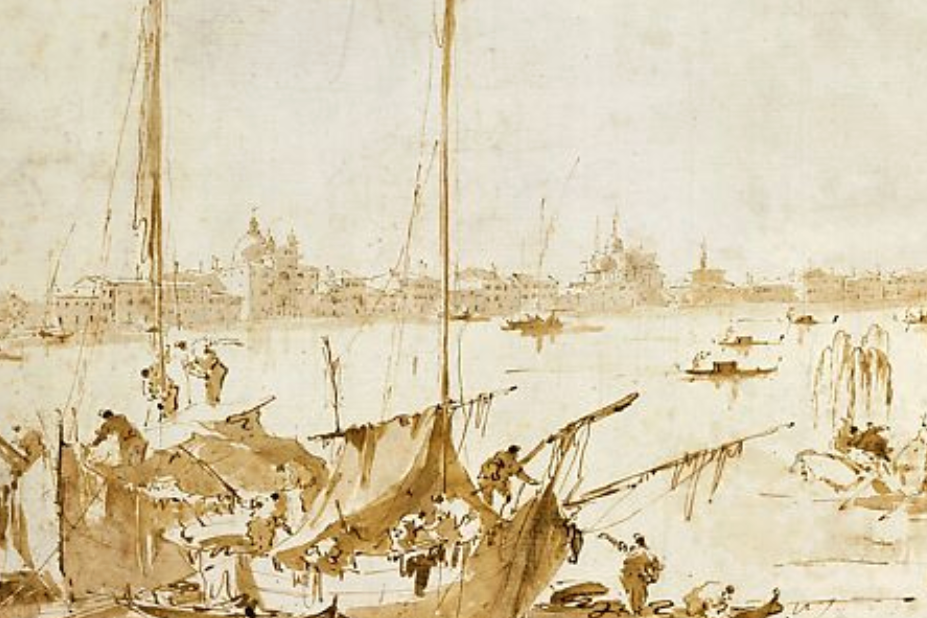
Characters:
Pantalone — an old Venetian merchant, miserly and melodramatic.
Arlecchino — a sprightly servant from Bergamo, playful, irreverent, full of contradictions.
Colombina — clever maid, sharp-tongued, heart of gold, and often the only sensible one.
Scene:
A sunny afternoon. The three sit in a piazza near a fountain. Pantalone sighs dramatically over a letter in his hands.
PANTALONE:
(Heaving a sigh so theatrical pigeons scatter, clutching the letter to his chest as if it were a will)
Ohhh—misery! Tragedy! Catastrophe disguised as correspondence! My dear friend Giacomo has abandoned Venice for Milan. Milan! A city of fog, fashion, and forgetfulness!
(Looking to the Heavens)
O saints, why must my friends migrate like storks, leaving me a lonely scarecrow in life’s field?
ARLECCHINO:
(With a splash of water to Pantalone)
Milan is two trains away, Pantalone. Two! You speak as if he’s crossed the Rubicon, the Alps, and the River Styx all in one afternoon.
COLOMBINA:
Don’t tease him. You know old hearts stretch like old stockings—unwillingly, unevenly, and never without complaint.
PANTALONE:
But friendship is fragile, Colombina! It is a vase of Murano glass—beautiful, yes, but crackable, breakable, shatterable at the first careless distance.
ARLECCHINO:
Or it’s like cheese—improves with age, grows stronger in a dark cellar, and occasionally smells like mortality itself.
COLOMBINA:
If your aunt’s cheese is any indication, mortality is generous.
ACT II — What Friendship Is
ARLECCHINO:
(kicking water)
What is friendship, hmm? Is it not a dance of remembering and forgetting? We forget the distance. We remember the affection. We forget the hours. We remember the warmth. We forget the debts— (looks at Pantalone, backs up) —or at least some people do.
PANTALONE:
(squirming)
He owed me three ducats. Three. And the interest grows wings in his absence.
COLOMBINA:
Friendship founded on coins will sink like a stone tossed into that fountain. True friendship sails. Even in storms.
PANTALONE:
But how do you know a friend still thinks of you when he is far? How do you know affection survives unseen?
ARLECCHINO:
Because affection isn’t a candle that blows out in the wind—it’s an ember glowing beneath ashes. Distance only hides it; it does not extinguish it.
COLOMBINA:
Presence teaches us pleasure. Absence teaches us fidelity. Both are needed.
ACT III — The Philosophical Turn
PANTALONE:
(Almost whispering)
Then… you two believe friendship is a thing of the soul?
ARLECCHINO:
What else? Do you think it lives in pockets? If so, then yes—Giacomo moved to Milan to escape you.
COLOMBINA:
Think of it this way: friendship is a shared horizon. Even when far apart, two people walk toward the same rising sun.
PANTALONE:
A horizon? Bah! You cannot touch a horizon. You cannot weigh it. You cannot rent it to a tenant.
ARLECCHINO:
Ah! That is precisely why it is so reliable—it belongs to no one. Friendship too must be free or it dissolves in the hand.
PANTALONE:
But when a friend is near, I see him. I hear him. I complain to him! When he is far, I am left with only… what? Echoes?
COLOMBINA:
Left with memory. Left with affection. Left with the parts of friendship that are not illusions of proximity.
ACT IV — Memory, Distance, and Faith
ARLECCHINO:
(grinning)
You trust that the stars still shine at noon even when you cannot see them, yes?
So too with friends.
COLOMBINA:
Distance doesn’t erase affection—it reveals its architecture. It shows us whether the bond is built on habit or on love.
PANTALONE:
(conflicted)
But what of the danger? What if absence… weakens affection? What if the thread snaps?
COLOMBINA:
Then it was thread, not rope.
It was habit, not heart.
ARLECCHINO:
Friendship across distance requires faith—not in miracles, but in constancy. Not in what you see, but in what you’ve become together.
PANTALONE:
(staring at the fountain)
Faith… I understand faith in trade: one sends goods with the belief they will not be lost. You are saying friendship is like that?
COLOMBINA:
Exactly. A mutual risk. A mutual trust.
ARLECCHINO:
And a mutual delight when the shipment arrives.
PANTALONE:
(laughs softly)
You two make even my anxieties seem foolish.
ACT V — A New Understanding
PANTALONE:
So you think Giacomo remembers me? Even in Milan?
COLOMBINA:
If he is a true friend, he does.
ARLECCHINO:
If he doesn’t, we’ll steal the train schedule and fetch him ourselves.
PANTALONE:
(chuckles, then grows thoughtful)
Perhaps… friendship is not ended by distance. Perhaps distance is simply friendship’s night—wherein the stars appear brighter.
COLOMBINA:
There you are. A poet at last.
ARLECCHINO:
Quick, before he changes his mind—someone carve it into the fountain!
ACT VI — The Promise
PANTALONE:
(rising, surprisingly gentle)
Tell me, you two—my noisy philosophers, my bad influences, my constant irritations— If one of us leaves, truly leaves, will the friendship hold?
ARLECCHINO:
If you trust us—yes. If you doubt us—no. Distance obeys the soul, not the map.
COLOMBINA:
And we will write, old man.
Letters are bridges built from memory.
PANTALONE:
(sighs deeply, a peaceful sigh this time)
Then let it be so. Friendship is not diminished by distance… it is illuminated by it.
ARLECCHINO:
Write that down before you forget it!
COLOMBINA:
Even if he forgets, the truth stays.
The heart remembers what the hands cannot hold.
(The church bell rings. The last light of day gilds the piazza. The three sit quietly, sharing a silence that feels like closeness itself.)
—End—