
The Second Temptation
Mar 3, 2026 | By Sydney Scheller BR ‘26
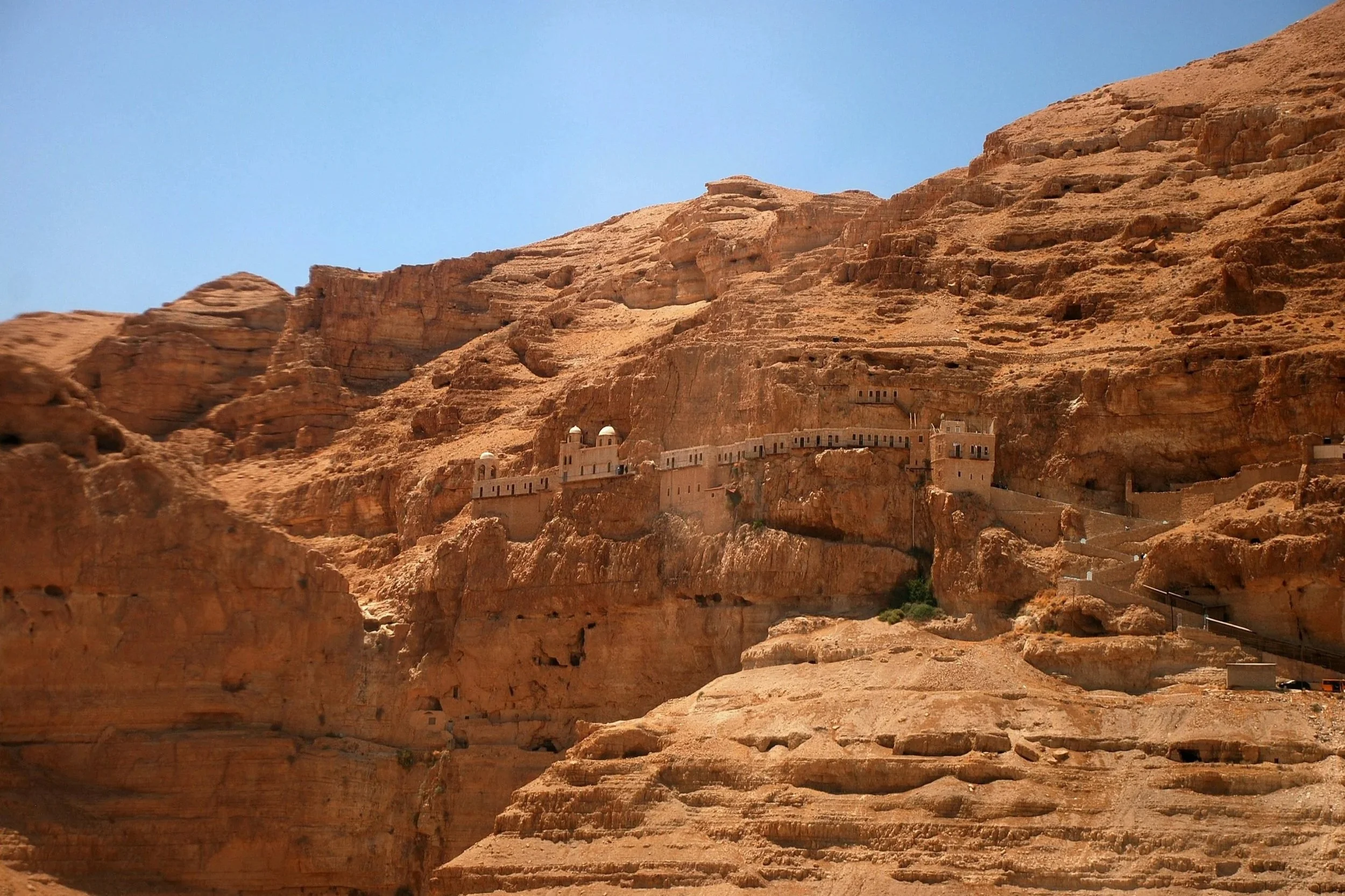
While many Lenten writings focus on what the season should mean, or how we should approach our attitude or actions during Lent, I would like to focus on the story that inspires this liturgical season: Jesus’ temptation in the desert. The three different temptations of Jesus represent the most alluring and detrimental temptations posed to humans throughout our lives. To this end, I would like to analyze the second temptation - one which I currently find the most poignant.
“Next the devil took him to the holy city and had him stand on the summit of the temple” [1]. Jesus is physically in the holiest city on Earth, at the pinnacle of the temple of God - a place that should be the most blessed place on Earth. However, Jesus is still in a spiritual desert. Being removed physically from the desert does not take him from his feelings of isolation. This first line frames when the second temptation is likely to appear in our own lives. It is not when our external circumstances are trying - rather, it is when our life is objectively going well, but is internally barren. How often do we feel we ought to be happy because our life is going well, and yet we cannot be? Does this not make the barrenness worse? It seems as if we have no reason to feel so unhappy when we are at what to an outsider appears to be a summit. But we are unhappy nonetheless.
This is precisely when the second temptation arises.
“Then he said to him, “If you are the Son of God, throw yourself down. For it is written:
‘He will command his angels concerning you,
and with their hands they will raise you up
lest you dash your foot against a stone.’ ” [2]
What is this temptation? It is the desire to do something destructive to yourself to prove that everything will be ok. It is the desire to be self-destructive so you can be caught by angels. There is nothing wrong with wanting to be caught by angels. However, when this desire occurs when you are not falling, and it is so strong that it makes you want to destroy the wonderful life God has blessed you with, that is sacrilegious.
Let us now analyze this seemingly absurd temptation and explain some of the logic behind it. In Kierkegaard’s Fear and Trembling, he argues that Abraham must make an absurd movement when he goes to Moriah to sacrifice Isaac [3]. Abraham must believe he is going to sacrifice Isaac and be willing to do it. At the same time, he must not resign himself to losing his son, but instead must have faith that he will receive his son back. These two beliefs are contradictory, and holding both is absurd; however, total faith in God that moves past resignation despite the belief that the bad thing will occur is a repeated theme throughout the bible. This experience is one of the beautiful mysteries God has allowed us to experience, and it is humbling and wonderful and good.
However, the second temptation centers around the desire to experience this absurd mystery on our command. The devil says, “Be self-destructive. Trust that God will miraculously save you.” His whisper is so appealing because what we all yearn for is God, and when this temptation is most potent, inside you are barren and want this all the more. You don’t feel God or the goodness of creation inside, despite knowing God is around you, and God has proclaimed the world to be good. Nihilism has, for the moment, won, and you desperately want some validation from God that there is anything inside you worth saving. The impulse is that by using self-destruction, you can externalize the internal pain you feel, and find an external balm.
But Jesus says no.
“Jesus said to him, “It is also written:
‘You shall not put the Lord your God to the test.’” [4]
Jesus’ response is simple and direct. “No.” This entire framing given by the devil is misleading. Asking for an absurd miracle, no matter how genuine the place of pain from which the desire comes, is a form of testing God [5]. This temptation is so horrible, so alluring, because it takes what is good: desire for communion with God, a recognition of your need for God and His mercy, and a time of your greatest need, twists it against Him.
So what do we do?
Wait for the Lord. We have an instinct to take things into our own hands and try to fix things. We dislike being uncomfortable, as an earlier blog post pointed out [6]. Spiritual barrenness can be good because, as it does in Exodus, in the Gospels, and in many other places, spiritual barrenness eventually leads us closer to God. Lent may be a time to sit uncomfortably in a spiritual desert and wait for the lord. He will come.
[1] Matthew 4:5 NCB
[2] Matthew 4:6 NCB
[3] Kierkegaard, Søren. Fear and Trembling.
[4] Matthew 4:7 NCB
[5] In Deuteronomy 6:16, which Jesus is quoting, it says, “You shall not tempt the Lord, your God, as you tempted him at Massah.” This references the story in Exodus where the Israelites tempt God by asking whether he is in fact among them and requesting water. God asks Moses to strike the rock, but he strikes it twice. Due to this, Moses is not allowed to enter the holy land. This highlights the dangers of tempting God once more and how this sin successfully tempts even those chosen by God.
[6] Adams, Raleigh. I Went Analog