
That’s it, I’m Going Fishing!
Feb 19, 2026 | By Isaac Oberman DC ‘26
“What profit is there for one who gains the whole world yet loses or forfeits himself?” Luke 9:25
Fish are finicky creatures. They dart to and fro through the reeds, glinting like gold in the riverbank. Imagist poet Amy Lowell characterizes the eccentric movement of fish in her poem The Pike as “a darkness and a gleam [1].” Oftentimes, this is why fishing is a cure for the impatient soul. It requires that one get used to waiting, and learn the motions of the water. What distinguishes fishing from other sports and outdoor recreation is the practice of slowness that mirrors living. The real art of the movements, the instruments, and the disposition of the fisherman or fisherwoman allows it to offer keen reflections on the good life. And there are few greater philosophers of the good life than Hank Hill.
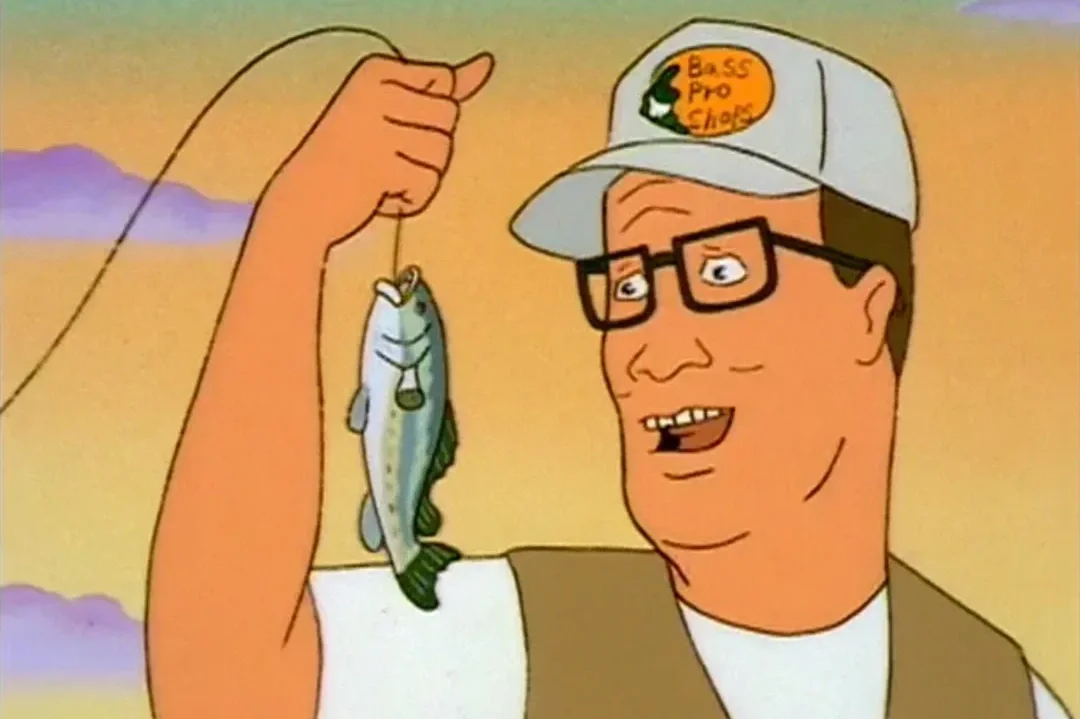
Hank Hill, the protagonist of the cult classic adult animation show King of the Hill, is an American man. He works as a propane salesman, he drives American-made trucks, and he drinks Texan beer. Most of all, he loves to go fishing. His sanctuary is on the water, casting for a largemouth in the heat of an August afternoon. One weekend, when he is out on the water with his pals, they whip out their artificial lures with special scents and begin to get bites. Hank, on the other hand, hooks on an All-American worm, considering their fancy tools as ‘cheater-bait.’ After a day without a single catch, though, Hank questions his convictions on fishing with worms and goes in search of something new. What good was it to fish if he didn’t catch any? However, a misunderstood recommendation of a new bait shop leaves Hank unwittingly fishing with crack cocaine, and hilarity naturally ensues.
Hank’s newfound success is exhilarating. The cast barely hits the water before a fish is on the line. In one scene, a bass Hank had caught and released throws itself from the water into Hank’s boat, wanting more. All of Hank’s friends are quick to try out the new ‘bait.’ In unnatural frenzy, both water and the fish therein frothed senselessly with drug-addled bass. However, the bait eventually runs out, and even worse, the fish develop a tolerance to their new bait. They need something stronger. Hank is the same - his fishing hobby lost its passion when the artistry went away, and he needs a new thrill to give him excitement. When seeking out a stronger bait from the mistaken ‘bait salesman,’ Hank and his friend Dale get busted by the authorities and must prove they weren’t actually ingesting the drugs to avoid prison. The catch is they have to prove it by demonstrating their new fishing technique to the judge with a day on the lake.
Hank knows it's futile with the fish's new indifference to his ‘bait,’ but since it is his only chance to avoid prison, he takes them out on the water and tries his best. Once on the water, though, he realizes it wasn’t only the bait that was at fault; his cheating was disrespectful of the art of fishing, and also of himself. When the judge isn’t looking, he slips on a worm. Dale calls him out, saying he is cheating, but Hank refuses the accusation, saying that the real cheating was abandoning the worm in the first place. Knowing that he is going to prison, Hank wants to at least remember casting off one more time with an All-American worm. As he throws his line out, the bass, so eager for a taste of the cocaine before, sees the worm and remembers its prey - its nature. Emerging from the darkness with a gleam, it takes the worm, saving Hank from prison and restoring fishing to its pure artistry.
Hank’s fishing story reminds us of one of the forgotten aspects of hedonistic pleasure seeking- humans are hard to satisfy, and our pursuit of satiation forgets the joy of the journey itself. Hank’s quest for an easier catch caused him to lose the aspects of fishing that made it worthwhile, like spending time on the water amidst nature or enjoying a cool drink in his boat. Hank’s failure to show loyalty to the humble earthworm is representative of the many ways we as people are distracted from noble pursuits or from practicing virtue. Lent is a time of grief, but it is also a time of reassessment. Have we, in the pursuit of some noble thing, used ignoble means? Have we somehow taken the artistry out of our lives by using cheap or unrespectable methods? Especially during Lent, we should remember to seek out the worms in our lives, the lynchpins of beauty, and hold to them. When we stick to worms, we may not catch as many fish, but we will always be really fishing, and that matters all the more.
[1] Amy Lowell. “The Pike.” Sword Blades and Poppy Seed. 1914. The Macmillan Company.
This piece was a reflection on King of the Hill, Season 2, Episode 5, Jumpin’ Crack Bass.