
Stepping Away from the Panopticon
Mar 31, 2026 | By Bailey Inglish UT Austin ‘27
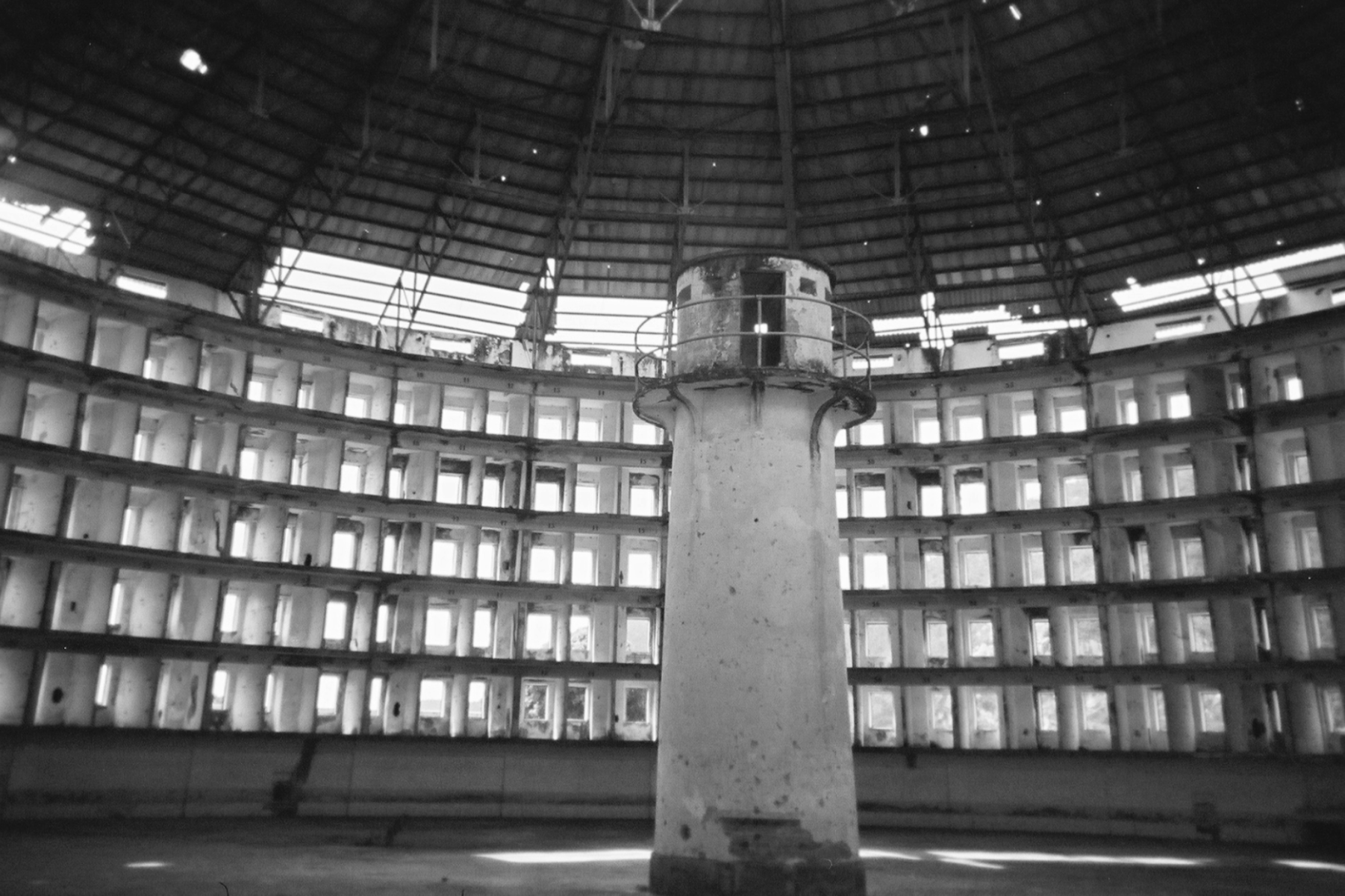
“What has been will be again,
what has been done will be done again;
there is nothing new under the sun.”
Ecclesiastes 1:9
A panopticon is a peculiar sort of structure—one in which a single observer is capable of watching a great multitude of human subjects. Introduced in the 18th century, this form of monitoring is most often imagined as a guard-prisoner relationship, but also in some other contexts, perhaps less antagonistically, could be framed as an instructor-pupil or doctor-patient interaction as well.
Regardless, most discussions of such an apparatus tend to center on the perspective of those who are being surveilled. The prisoners, the pupils, the patients. But what of the observer?
While we may sympathize with the watched, in our present day, more often than not, we find ourselves the watcher. On social media, we peek into the lives of people we know and people we don’t, in many cases with them none the wiser that we’ve done so. With the proliferation of infinite scrolling, any meager twitch of curiosity is met with a gluttony of ephemeral satisfaction as fleeting as it is voluminous. Now, algorithms decide what we see and what we remain blind to, what we desire and what we loathe, what we earnestly hope for and what we cynically push away, and, at a societal scale, more and more, what we know to be true and what we dismiss as false.
Being online presents an odd panoptic duality in that everyone is at once not only seen, but seemingly all-seeing as well. I chose to step away from at least the latter half of that problem when I gave up my newsfeeds for Lent. No more Apple News. No more podcasts. No more New York Times. Oddly though, after deleting my news apps, I nevertheless kept on finding myself drawn in by the empty hole they left in my homescreen, and I’d swipe over to attempt to tap on an empty gap before catching myself—embarrassing, frankly. Poor timing, some might say, given the state of the world. I missed out on the Middle East’s newest conflict. Oh well. I also didn’t notice the nation’s latest economic woes until I checked my bank account last week. Yikes. However, fasting in this state of reluctant unknowing has offered me a few points of reflection as we eagerly approach Easter.
First, return to the garden. For what offense were we cast out? What error deserved death? Where do our sins first hearken back to? Seeking knowledge on our own terms by grasping at wisdom apart from trust in God. Just as much for yearning to know what was right as what was wrong when we bit into the fruit. God made us in his image, and the way he made us was very good. Yet the way he made us was as limited creatures all the same. We aren’t made to know everything; we never were. Yet sometimes we can be so bold as to conflate our increasingly precise awareness of our hyper-digital world with the complete omniscience, online or off, that belongs to God alone as its creator.
Second, recall Jesus’ temptation in the wilderness. That is, the very fast that inspired the tradition of Lent. Near the end, when he’s feeling the pangs of hunger and thirst against his human flesh most acutely, Jesus is approached by Satan and brought up to a high mountain to be shown all the nations of the world. Satan tells Jesus that all he has to do to have these kingdoms is bow down and worship him. Jesus sends Satan away, concluding his final trial. Would we do the same in his position? We can often approach new media with a similar logic: the more of the world we see, the more of it we have under our control. If we know the intricacies of the geopolitical tensions at the heart of the latest international crisis, perhaps we can shift the outcome. If we subscribe to the latest updates in the lives of our favorite celebrities or sports teams, we might feel a stake in their next success or failure. If we can see where the markets are heading, maybe we can make just the right trades to put an extra buck or two in our pocket. Though the outcomes are appealing, the heart posture they cultivate is spiritually deforming. Such access to information is given to us not to replace God, but to pursue him further.
And third, recall Christ’s own paradoxical relationship with knowsgle. He sat in the temple as a young boy to learn despite having the capacity to know every scroll. He came to bring the greatest news the world has ever known, but delivered it in parables. His response to being crucified was to implore his Father to “forgive them, for they know not what they are doing” [1]. The Holy Spirit produces a number of fruits in the hearts of believers: love, joy, peace, patience and the like. Omniscience isn’t one of them. When we can’t wrap our minds around the way the world is, can’t solve the puzzle everyone wants to know the answer to, can’t seem to get it right, we should take heart that the Lord is still working his good will in us and trust that he reigns.
The ability to know any fact or current event on a whim is a wonderful accomplishment of our society. But for it to turn into doomscrolling or self-numbing can leave us trapped and ensnared in a panopticon of our own making, where we are both the watcher and the confined. So for the believer, it can take perspective to remember that the remarkable epistemic power we grasp in the palm of our hand ought not to be our source of comfort or solace or hope. For these, we should look to our Savior, and to him alone.
[1] Luke 23:34