
Psalm 8:4
Mar 28, 2026 | By Nicolas Wyszkowski MY ‘26
“What is mankind that you are mindful of them, human beings that you care for them?” — Psalm 8:4, NIV
We inhabit a vibrant universe. From the smallest subatomic particles to the largest supernovae, we are all part of an incredible stellar soirée. Even in the vast expanses of “empty” space that occupy much of the observable universe, there is constant activity. Photons beaming across unimaginable distances tell us of ancient galactic histories. Quantum fluctuations tell of a reality full of energy and life at its most basic level. Beyond these near-omnipresent occurrences, countless other phenomena inspire awe and wonder in us: exploding stars, planet-eating black holes, quasars shooting out jets of matter for hundreds of light-years. And that’s before we’ve gotten to our own solar system, or even to Earth, where the beauty of a snow-capped mountain range or picturesque sunset leaves us breathless.
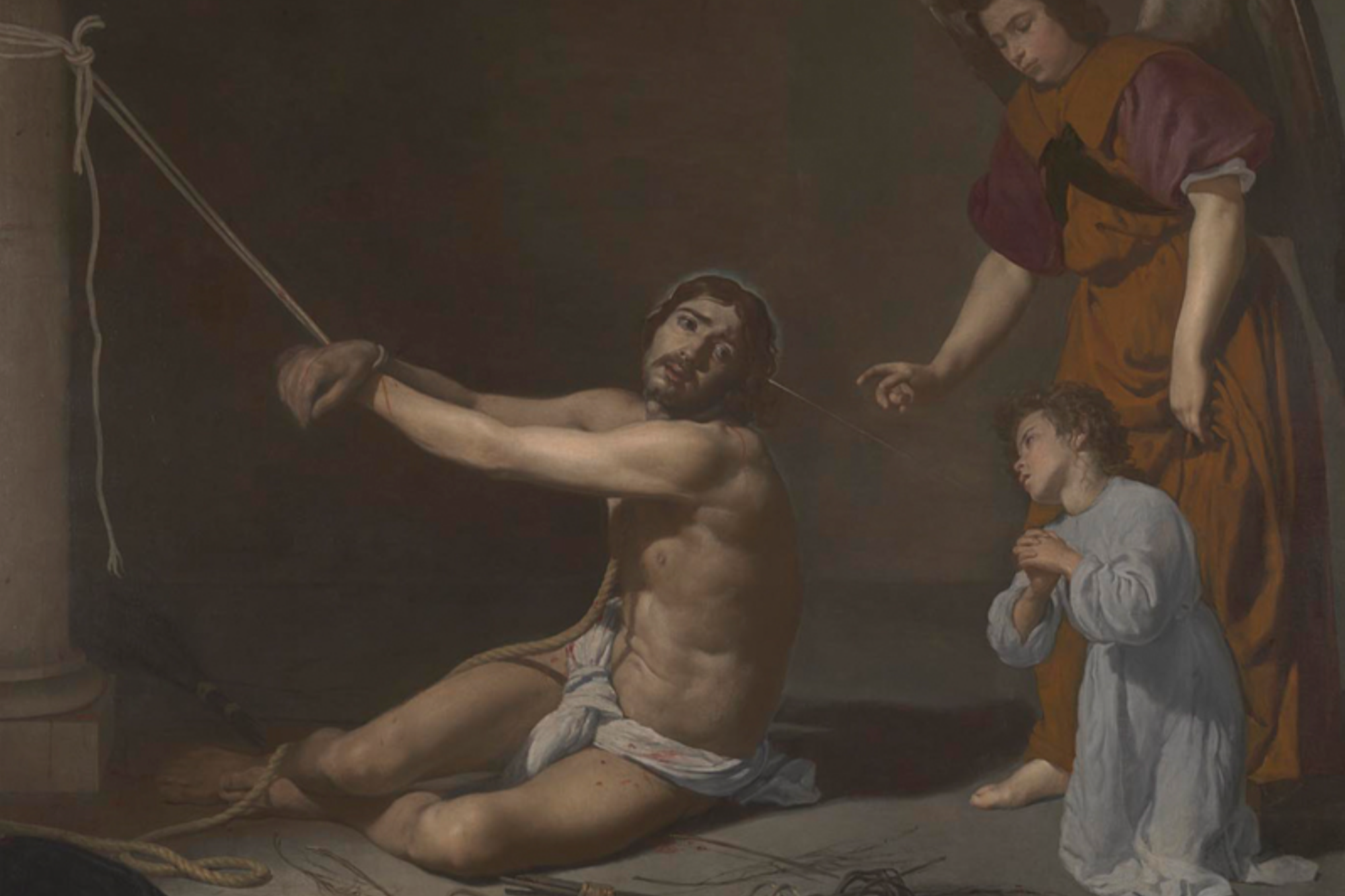
As we lead up to Easter this season, I want to ponder what it means that the Creator and Sustainer of the cosmic canvas filled with the marvels described above came to Earth to be brutally murdered. It is a pious reflection to think of Jesus dying on a hill He created; it becomes an unfathomable mystery when we consider that it wasn’t just that hill which found its root cause in Him, but indeed everything that exists.
To tease out the depth of this thought, we should start at the beginning. God, not out of deficiency or need but out of desire and choice, creates. Not just a small solar system, or even a galaxy, but a cosmos so vast that infinite is the best word we have to describe it. As the cosmic clock continues ticking, we see a hot, bubbling baby universe turn into a mature, structured system teeming with all sorts of incredible formations. And then, amidst this sea of marvels, we come along, inhabiting a pale blue speck for only a brief moment in the galactic timeline.
Now, we’ve arrived: the stage is set for the greatest show in history. What do we see when God pulls back the curtain and chooses to reveal Himself? A 30-year-old Jewish carpenter turned preacher, in a backwater section of the Roman Empire, with an earthly ministry shorter than most PhD programs. To top it off, that ministry ends with His brutal execution, a criminal’s death so brutal that it was indecent to talk about in general conversation.
And yet this Jesus of Nazareth breathes again, leaving behind an empty tomb, changing human history. God walked on earth, and He did so as a firm, loving, humble man. Why? The best answer I have is love. Even with this answer, I can hardly fathom why God, without need or coercion, creates such a universe as ours in which history culminates with His death and resurrection. And yet, He does.
This Lent season, I want to sit in the baffling reality of the Crucifixion. Some have suggested that our vanishing stint in a seemingly insignificant nook of a random galaxy indicates the absurdity of religious belief. However, when we ponder the Cross, our insignificance doesn’t detract from faith, but adds incredible depth to it. God, as incredible and praise-worthy as He is, is not only mindful of man, but loving and gracious towards him, displayed most fully in Christ crucified.
“Amazing grace (how sweet the sound)
that saved a wretch like me!
I once was lost, but now am found,
was blind, but now I see”